
Fulfillment Center vs Warehouse: Understanding the Key Differences for Your Business
Running an online business means making smart choices about storing and shipping your products. Two terms you'll hear often are "fulfillment center" and "warehouse." While many people use these words
December 23, 2025 · By PrepFort TeamRunning an online business means making smart choices about storing and shipping your products. Two terms you'll hear often are "fulfillment center" and "warehouse." While many people use these words as if they mean the same thing, they are actually quite different.
A fulfillment center handles the complete order fulfillment process, picking, packing, and shipping products directly to customers, while a warehouse primarily focuses on long-term storage of bulk inventory. Understanding these differences can help you save money, ship faster, and keep your customers happy. But with so many specialized fulfillment options available today, how do you know which type is the perfect match for your unique products?
Let's break down what makes each option unique and which one might work best for your business.
What is a Warehouse?
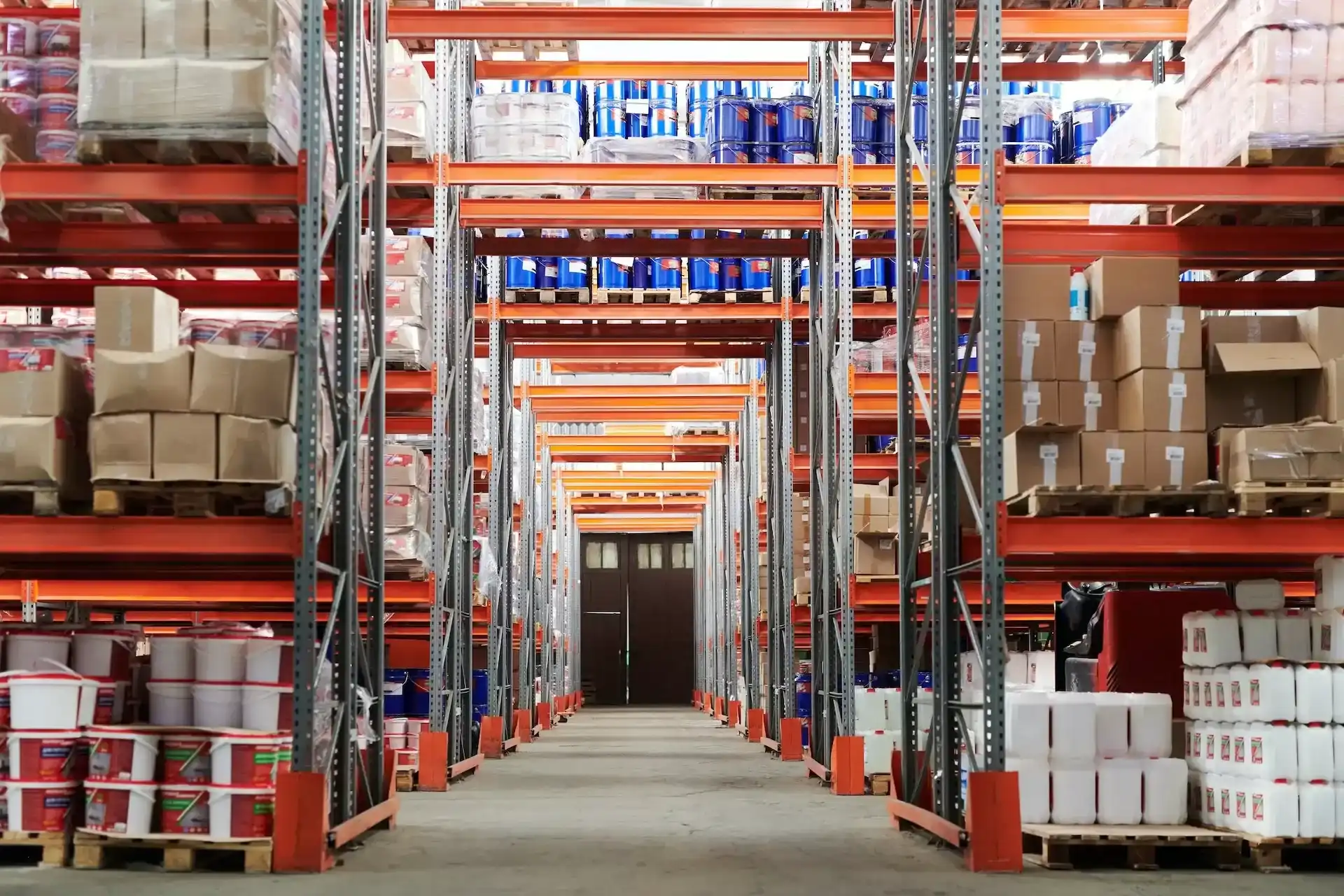
A warehouse is a large building designed mainly for storing products. Think of it as a giant storage locker where businesses keep their inventory safe until they need it.
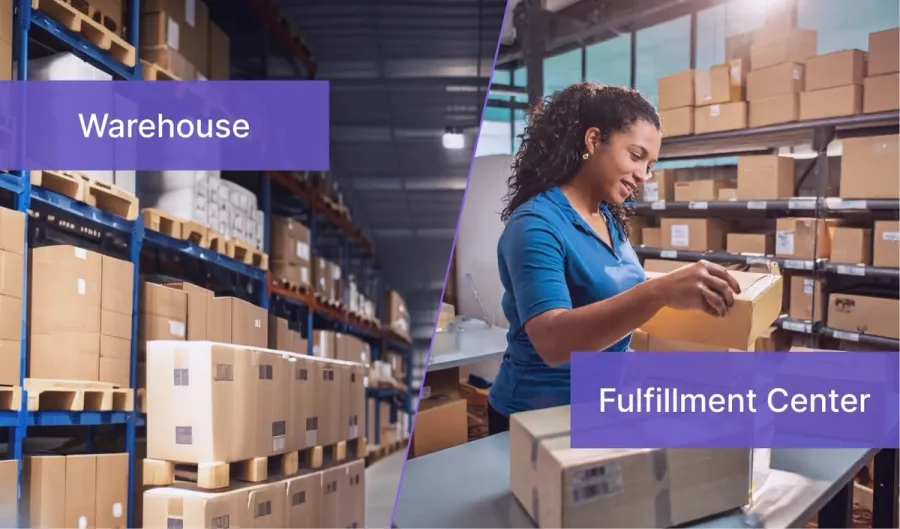
Warehouses focus on one main job: holding your products for weeks, months, or even longer. They're perfect for businesses that need to store bulk inventory, seasonal items, or products that don't sell quickly. The operations inside a warehouse are pretty straightforward – goods come in, get organized on shelves, and stay there until someone needs to move them out.
Most warehouses sit in industrial areas outside busy cities where rent costs less. They use basic systems to track what's inside and where everything is located. According to industry data, traditional warehouses typically handle inventory that stays stored for 90 days or more, making them ideal for long-term storage needs.
What is a Fulfillment Center?
A fulfillment center is completely different. It's like a busy restaurant kitchen where orders keep coming in, and meals keep going out, except instead of food, it's your products heading to customers.
Fulfillment centers handle the entire order fulfillment process from start to finish. When a customer clicks "buy" on your website, the fulfillment center springs into action. Workers pick the right product from the shelves, pack it carefully in a box, print a shipping label, and send it on its way to your customer.
These facilities buzz with constant activity. Products don't sit around for long – ideally, inventory moves through a fulfillment center in less than 30 days. The goal is speed and accuracy to meet customer expectations for fast delivery times.
Key Differences Between Fulfillment Centers and Warehouses
Understanding the core differences helps you make the right choice for your business needs.
Storage Duration: Long-Term vs Short-Term
Warehouses excel at long-term storage. If you're storing winter coats in July or holding inventory for next year's product launch, a warehouse makes sense. You're paying mainly for the space to keep things safe.
Fulfillment centers work best for inventory that moves quickly. Studies show that e-commerce businesses using fulfillment centers typically achieve inventory turnover rates of 8-12 times per year, compared to just 4-6 times for traditional warehousing.
Operations and Daily Activities
Walk into a warehouse, and you'll see a calm, organized space. Workers receive shipments, put items away, and occasionally move products out in bulk orders. The pace is steady and predictable.
Step into a fulfillment center, and you will feel the energy immediately. Teams are picking individual items, packing boxes, printing labels, and coordinating with shipping carriers. Technology like warehouse management systems keeps everything running smoothly. Workers handle returns, check quality, and sometimes even add special touches like gift wrapping.
Technology and Automation
Modern warehouses use inventory management systems to track what's inside, but the technology stays pretty basic. Barcodes and computer records help workers find items when needed.
Fulfillment centers rely heavily on advanced technology. Real-time tracking systems show exactly where every product is at any moment. Automated conveyor belts move boxes around. Some facilities even use robots to help pick items. According to recent logistics reports, fulfillment centers using automation can process up to 3-4 times more orders per hour compared to manual operations.
Shipping and Carrier Coordination
Warehouses typically schedule pickups once or twice a week. Shipping companies come by to collect larger shipments going to retailers or other warehouses.
Fulfillment centers coordinate with multiple shipping carriers every single day, sometimes several times per day. They need to meet cutoff times for same-day or next-day shipping. This frequent activity ensures your customers receive their orders quickly, which is crucial since 56% of online shoppers expect delivery within 2-3 days, according to consumer research.
Types of Fulfillment Centers
Not all fulfillment centers are built the same; each type specializes in handling specific product categories with unique storage and shipping requirements.
Climate-Controlled Fulfillment Centers
These buildings keep the temperature just right all year long, usually between 60 and 75 degrees. This steady temperature protects products that can be damaged by heat or cold. Think about things like makeup, face creams, vitamins, and pills, they need this special care.
Electronics also do better in these controlled spaces. Heat and moisture can ruin phones, tablets, and computers. These facilities cost about 15 to 25 percent more than regular storage, but they save you money by keeping products safe and sellable.
Cold Chain Fulfillment Centers
These special centers work like giant refrigerators and freezers. They keep food fresh and safe to eat. The refrigerated sections stay between 32 and 40 degrees for items like fresh vegetables and dairy products.
The freezer areas go down to zero degrees or colder for frozen foods and ice cream. These places follow strict food safety rules set by the government. They also have backup power generators, so if the electricity goes out, your food stays frozen and safe.
Big and Bulky Item Facilities
Some products are just too big or heavy for regular fulfillment centers. These special facilities handle items that weigh over 150 pounds or measure more than 96 inches in any direction.
Workers here use forklifts and strong pallet jacks to move heavy furniture, exercise machines, washing machines, and big TVs safely around the building. These centers have extra-wide aisles and tall ceilings to store and move large items without damage.
Many of these places offer white-glove delivery service, which means they don't just drop the box at your door. The delivery team brings your furniture inside, puts it in the room you want, takes it out of the box, and even puts it together for you.
The cost works differently, too. Instead of just weighing your item, they look at how much space it takes up on the truck. A light but huge item might cost more to ship than a small heavy one.
Small Picks and High-Security Centers
These centers focus on tiny but valuable items. Jewelry, expensive watches, designer handbags, and small electronics need extra protection. These facilities have cameras everywhere watching 24 hours a day.
Only certain workers can enter specific areas, and every single item gets tracked from the moment it arrives. The packing uses special tape and boxes that show if someone tried to open them. Many of these centers also offer insurance on each item, giving you peace of mind.
Retail Store Fulfillment Centers
Big stores like Target and Walmart now use their regular shops as mini fulfillment centers. When you order online, the closest store with your item in stock ships it to you.
This smart system lets stores offer same-day delivery or even 2-hour delivery in some cities. It costs less to ship because the product doesn't travel as far. Regular stores can now compete with online-only companies by offering fast local delivery.
Services Offered by Fulfillment Centers
Beyond just storing and shipping, fulfillment centers provide valuable services that warehouses don't typically offer.
They handle the complete picking process, finding the exact items ordered from thousands of products. Professional packing ensures items arrive safely, using the right box size and protection. Fulfillment centers manage shipping labels, tracking information, and carrier selection to get the best rates.
When customers want to return items, fulfillment centers process those returns, inspect the products, and get them back on the shelf if they're in good condition. Many also offer kitting services, putting multiple items together as a set, and special packaging with your company branding.
Benefits of Using Fulfillment Centers
The advantages of fulfillment centers become clear when you look at real business results.
Faster Order Processing and Shipping: Fulfillment centers can ship most orders the same day they're received. Speed matters; businesses report that fast shipping increases customer satisfaction scores by up to 70%.
Lower Operational Costs: You avoid paying for warehouse space, equipment, staff wages, and shipping supplies. Research shows that outsourcing to fulfillment centers can reduce logistics costs by 20-30% for growing e-commerce businesses.
Easy Scalability: During busy seasons like holidays, fulfillment centers handle the extra volume without you hiring temporary workers or renting more space.
Focus on Growing Your Business: Instead of spending time packing boxes, you can focus on marketing, creating new products, and serving customers.
Access to Better Shipping Rates: Fulfillment centers ship thousands of packages daily, giving them negotiating power for discounts up to 40% off regular carrier rates.
Distribution Centers: The Third Option
There's actually a third player in this game, distribution centers. These facilities act as the middle point between manufacturers and fulfillment centers.
Distribution centers receive large shipments from factories, then break them down and send smaller quantities to multiple fulfillment centers across different regions. This hub-and-spoke model helps businesses position inventory closer to customers without managing many locations themselves.
For example, a company might ship container loads from overseas to one distribution center in the Midwest. That center then distributes products to fulfillment centers in California, Texas, New York, and Florida, ensuring 2-day ground shipping reaches 90% of U.S. customers.
Which Option is Right for Your Business?
Choosing between a warehouse and a fulfillment center depends on your specific situation.
Consider a warehouse if you:
- Sell products in bulk to retailers rather than individual consumers
- Have inventory that doesn't need to ship immediately
- Need affordable long-term storage for seasonal products
- Ship large quantities in fewer orders
Choose a fulfillment center if you:
- Run an e-commerce store selling directly to customers
- Need fast shipping to compete with Amazon and other retailers
- Process dozens or hundreds of individual orders daily
- Want to offer 2-day or next-day delivery
- Prefer to focus on marketing and growth rather than logistics
Many successful businesses actually use both. They store extra inventory in warehouses and transfer it to fulfillment centers as needed, balancing cost with speed.
Your order volume matters too. If you're shipping less than 50 orders monthly, you might handle fulfillment yourself. Between 50 and 500 orders monthly, a fulfillment center starts making financial sense. Above 500 orders, fulfillment centers become almost essential to maintain quality service.
Conclusion
Warehouses and fulfillment centers serve different purposes in the supply chain. Warehouses provide cost-effective long-term storage with basic operations. Fulfillment centers deliver the speed, technology, and services needed to meet modern customer expectations for fast shipping and easy returns.
The right choice depends on your business model, order volume, and growth goals. Many online businesses find that fulfillment centers give them the competitive edge they need, allowing them to promise 2-day shipping and hassle-free returns just like the big retailers.
As your business grows, your logistics needs will evolve. Start by understanding these differences, then choose the solution that aligns with where you are today and where you want to be tomorrow.
Ready to speed up your order fulfillment and delight your customers? Explore PrepFort's comprehensive fulfillment solutions and transform your logistics operations today!