
Online Order Fulfillment Process: 5 Steps to Transform Your Ecommerce Operations in 2026
When you click "buy now" on a website, a complex journey begins behind the scenes. This journey, called the online order fulfillment process, ensures your package arrives at your doorstep on time and
December 23, 2025 · By PrepFort TeamWhen you click "buy now" on a website, a complex journey begins behind the scenes. This journey, called the online order fulfillment process, ensures your package arrives at your doorstep on time and in perfect condition.
Order fulfillment serves as the backbone of every successful online store. Recent industry data reveals that 84% of customers refuse to purchase from a brand again after experiencing just one poor delivery. Understanding this process becomes crucial for any business selling products through digital channels.
What is Order Fulfillment?
Order fulfillment encompasses the entire journey of getting products from warehouse shelves to customer doorsteps. The process begins when someone places an order on your website and concludes when they receive their package. Key activities include receiving inventory, storing products, picking items, packing boxes, and shipping orders to customers.
Consider it similar to a relay race where each step must coordinate smoothly with the next one. If one runner stumbles, the whole team suffers. In ecommerce, that stumble translates to late deliveries, incorrect items, or damaged products reaching customers.
For businesses selling to individual customers (B2C) or other companies (B2B), the fundamental steps remain consistent. However, B2B orders typically involve larger quantities and more intricate shipping arrangements.
The 5-Step Order Fulfillment Process
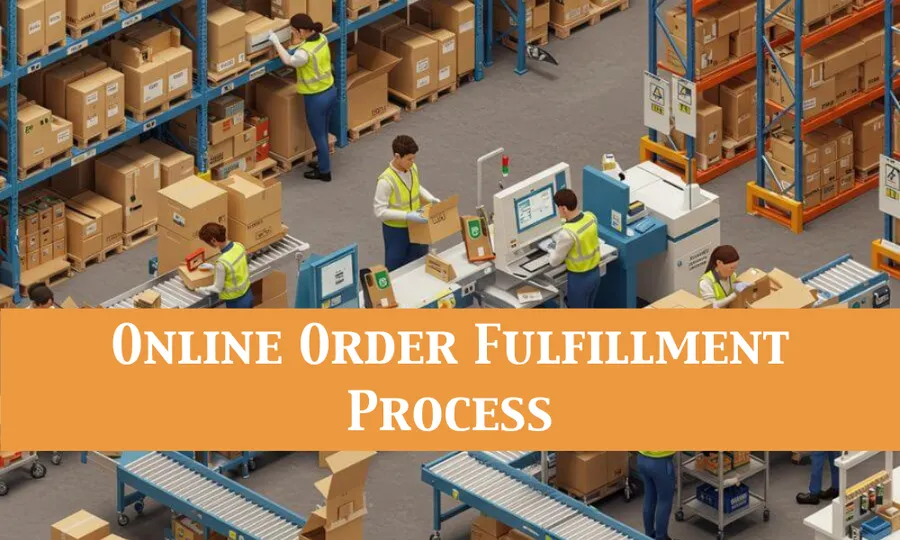
Every successful online order progresses through five main stages, each playing a vital role in maintaining customer satisfaction.
Step 1: Receiving and Inventory Storage
Products arriving at a warehouse undergo careful counting by the receiving team to match supplier paperwork. Staff members inspect for damage, attach barcode labels, and input all information into warehouse management systems. Studies demonstrate that proper receiving protocols reduce inventory errors by up to 67%.
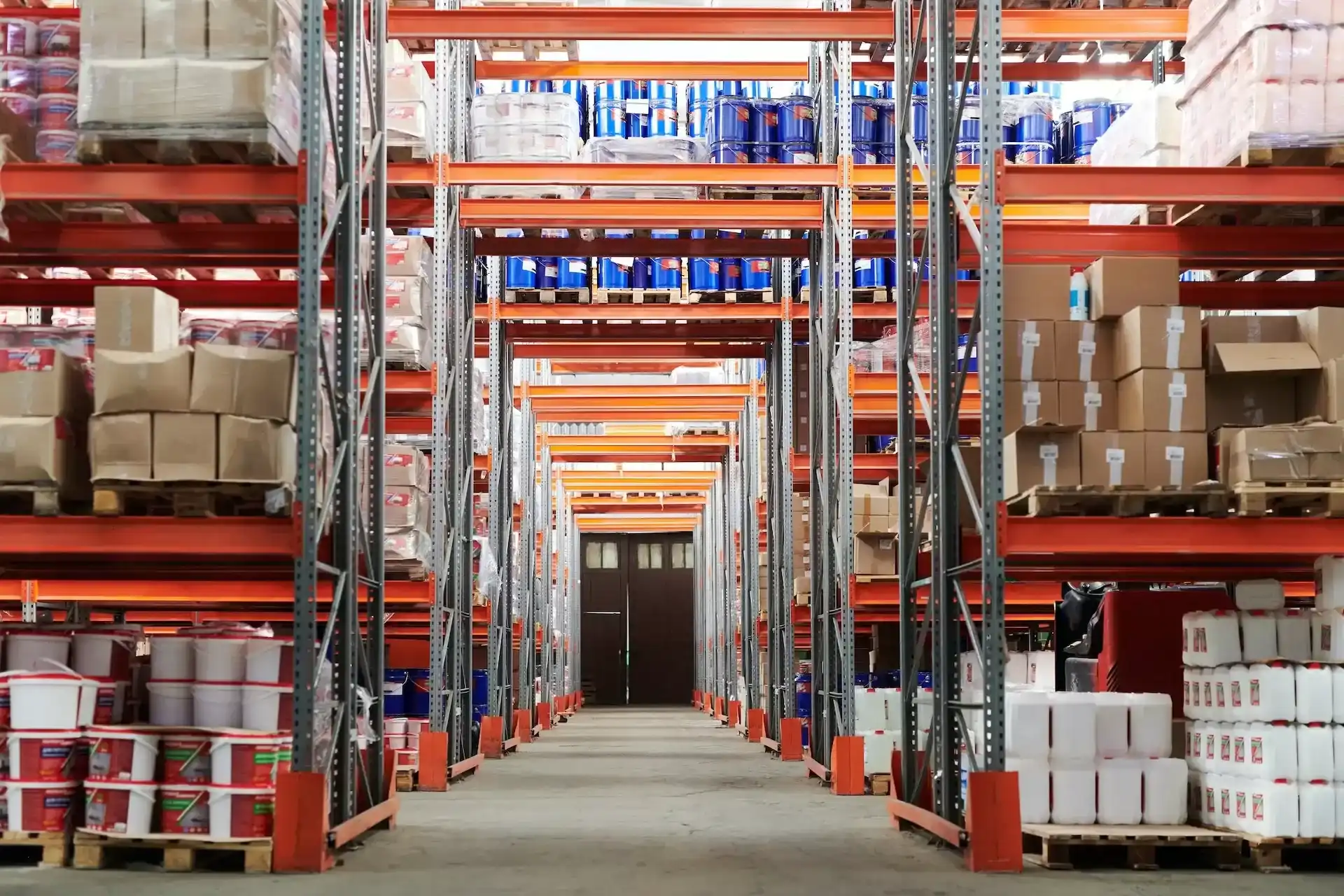
Strategic warehouses position popular items closer to packing stations. This organizational approach can decrease picking time by 30% or more. Items with slower sales velocity move to back storage areas. Quality warehouse storage solutions maintain inventory organization and accessibility.
Step 2: Order Processing
Customer checkout completion triggers automatic order flow into the fulfillment system. Modern technology creates direct connections between online stores and warehouse computers. This automation occurs within seconds rather than hours.
The system verifies item availability, calculates shipping costs, and assigns orders to pickers. Approximately 73% of online shoppers anticipate receiving order confirmation within minutes. Rapid order processing enables this expectation. Businesses utilizing advanced inventory management tools can process orders three times faster than manual methods.
Step 3: Picking
Warehouse workers receive picking lists displaying exact item locations within the facility. They navigate through aisles, scan barcodes, and gather products. Three common picking methods include batch picking for multiple orders simultaneously, wave picking for scheduled groups, and zone picking for assigned areas.
Barcode scanning reduces picking errors to below 1%. Without scanning technology, error rates climb to 5-10%. This difference becomes substantial when shipping thousands of orders monthly.
Step 4: Packing
Pickers transport items to packing stations where workers examine each product for quality concerns. They select appropriate box sizes, add protective materials such as bubble wrap, and insert packing slips. The primary objective balances product protection during transit with cost management.
Oversized boxes create unnecessary expenses. Carriers calculate charges based on dimensional weight, meaning box dimensions directly impact shipping bills. Efficient packers employ custom packaging solutions that fit products snugly. This strategy can reduce shipping costs by 15-20%.
Some brands incorporate special elements like branded tissue paper, thank-you cards, or promotional inserts. These modest additions create memorable unboxing experiences that convert first-time buyers into loyal customers.
Step 5: Shipping and Returns Processing
Following packing completion, the shipping station prints labels and coordinates carrier pickup. Major carriers including UPS, FedEx, and USPS collect packages directly from fulfillment centers. Systems automatically transmit tracking numbers to customers through email or text messages.
Delivery speed carries enormous weight. Research indicates 56% of online shoppers demand 2-day shipping or faster. Companies unable to satisfy these expectations lose sales to competitors who can.
Returns occur regularly in ecommerce operations. Approximately 20-30% of online purchases face returns, compared to merely 8-10% in physical retail stores. A streamlined returns process encourages customer retention. Warehouses receive returned items, inspect their condition, and either restock or dispose of them accordingly.
Why Order Fulfillment Matters for Your Business
Proper fulfillment execution impacts three critical business areas: customer relationships, operational costs, and growth potential.
- Customer experience depends heavily on fulfillment quality. Orders arriving quickly and accurately generate positive reviews and word-of-mouth recommendations. Problems trigger social media complaints and permanent customer loss. One study discovered that 96% of customers would repurchase from companies offering easy returns.
- Fulfillment represents a significant expense category. For most ecommerce businesses, fulfillment costs consume 15-20% of total revenue. Inefficient processes waste substantial money on labor, storage space, and shipping fees. Optimizing each step can preserve thousands of dollars monthly.
- Business scaling becomes nearly impossible without solid fulfillment foundations. You might manage 50 weekly orders from a garage, but what happens at 500 orders? Or 5,000? Growing brands require systems functioning effectively at any volume. Partnering with professional fulfillment services allows focus on marketing and product development instead of packing boxes.
Choosing Your Fulfillment Strategy
Three primary approaches exist for managing order fulfillment, each suiting different business circumstances.
In-house fulfillment means handling every aspect internally. This approach works effectively for new businesses shipping under 100 monthly orders. You maintain complete control but must invest in storage space, packing materials, and shipping software. Most businesses outgrow this method within 1-2 years.
Third-party logistics (3PL) involves outsourcing fulfillment to specialists. These companies possess existing warehouses, staff, and technology infrastructure. They ship your products, usually at lower costs than self-fulfillment. About 86% of Fortune 500 companies employ 3PL services. This option makes sense when monthly orders exceed 200-300.
Dropshipping means manufacturers ship directly to customers without intermediary handling. You never touch inventory. This model features low startup costs but offers minimal control over shipping speed and quality. Delivery times often stretch to 2-4 weeks, frustrating customers expecting Amazon-speed shipping.
Key Factors in Your Decision
Several important considerations help determine your optimal fulfillment path.
- Order volume requires primary assessment. Shipping 50 orders differs dramatically from shipping 5,000. Product variety matters equally. Managing three products proves simpler than handling 300 SKUs.
- Geographic location affects costs significantly. If customers span the United States, shipping from one California warehouse means paying premium rates for East Coast deliveries. Strategic warehouse locations can reduce shipping costs by 30-40% and decrease delivery times from 5 days to 2 days.
- Technology integration determines order flow efficiency. Your fulfillment system should connect seamlessly with Shopify, WooCommerce, Amazon, and other platforms you operate. Manual order entry wastes time and creates errors.
Conclusion
The online order fulfillment process transforms customer clicks into delivered satisfaction. Each step carries importance, from receiving inventory to managing returns. Proper execution builds loyal customers, controls operational costs, and powers sustainable business growth.
Ready to upgrade your fulfillment operations? Explore Prepfort's complete warehouse and fulfillment solutions designed to scale with your growing business today.